
What Is Ergonomic Wellness
Ergonomic Wellness at Workplace: A Guide for Employees
Ergonomic wellness is an important part of creating a healthy, comfortable and productive workplace. With employees spending several hours at their desks, using computers and performing repetitive tasks, the way workstations are designed can have a significant impact on their physical well-being.
Poor workstation arrangements, prolonged sitting and repetitive movements can contribute to discomfort, muscle fatigue and musculoskeletal disorders (MSDs). By adopting workplace ergonomics, organizations can create work environments that support employee health, improve comfort and encourage better working habits.
In this guide, we explore what ergonomic wellness means, why it matters and how organizations can implement effective workplace ergonomics practices.
What Is Ergonomic Wellness?
Ergonomic wellness refers to designing and arranging workspaces, equipment and work processes to suit the physical needs and capabilities of employees.
The goal is to improve the interaction between people and their work environment while minimizing unnecessary physical strain.
Workplace ergonomics focuses on:
- Maintaining comfortable and supported working postures.
- Reducing repetitive movements and excessive physical exertion.
- Designing workstations that support different body types and working requirements.
- Encouraging regular movement and healthy working habits.
- Creating a safer and more comfortable work environment.
Ergonomic wellness is an essential component of a comprehensive corporate wellness program, particularly in organizations where employees spend long hours working at desks or performing repetitive tasks.
Why Is Ergonomic Wellness Important in the Workplace?
A well-designed workplace can support employee comfort, reduce avoidable physical strain and contribute to a healthier working environment.
1. Supports Better Posture
Poor workstation arrangements can encourage employees to bend their necks, round their shoulders or sit in uncomfortable positions for extended periods.
Ergonomic adjustments help employees maintain more comfortable and supported postures while working.
2. Reduces Physical Strain
Prolonged sitting, repetitive movements and poorly positioned equipment can contribute to discomfort in the neck, shoulders, back, wrists and other parts of the body.
Workplace ergonomic improvements can help reduce these physical demands and support employee well-being.
3. Improves Employee Comfort
Comfortable workstations allow employees to focus on their tasks without unnecessary discomfort caused by unsuitable furniture or equipment.
Simple adjustments, such as positioning a monitor at a comfortable height or providing adequate back support, can make a meaningful difference to the working experience.
4. Supports Productivity and Employee Engagement
A comfortable and supportive work environment can help employees remain focused and engaged throughout the working day.
Organizations that prioritize employee well-being also demonstrate a commitment to creating a healthier and more supportive workplace culture.
5. Helps Manage Workplace Health Risks
Ergonomic improvements can help reduce exposure to workplace risk factors associated with musculoskeletal disorders, including back pain, neck discomfort and repetitive strain.
However, ergonomics is not a guarantee against injury. It should be combined with appropriate work practices, movement breaks and occupational health guidance.
Common Ergonomic Problems in Office Workplaces
Many ergonomic problems develop gradually through everyday working habits and unsuitable workstation arrangements.
Some common examples include:
- Sitting for extended periods without changing positions.
- Working with a laptop screen positioned too low.
- Using a chair that does not provide adequate support.
- Keeping the keyboard or mouse too far away from the body.
- Reaching repeatedly for frequently used office equipment.
- Working with the wrists bent or shoulders raised.
- Performing repetitive tasks without sufficient variation or recovery time.
Identifying these issues early allows organizations to make practical improvements before discomfort becomes a persistent problem.
7 Practical Workplace Ergonomics Tips for Employees
Employees can improve their workstation comfort by following a few simple ergonomic practices.
1. Adjust Your Chair
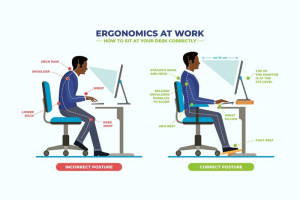
Use a chair that provides adequate back support. Adjust the seat height so your feet rest comfortably on the floor or a footrest.
Your knees should be approximately level with your hips, and your shoulders should remain relaxed.
2. Position Your Monitor Correctly
Place your monitor directly in front of you, approximately an arm’s length away.
The top of the screen should generally be at or slightly below eye level, allowing you to look at the screen without repeatedly bending your neck.
Adjust the distance and height according to your comfort, vision and screen size.
3. Maintain a Comfortable Keyboard and Mouse Position
Keep your keyboard and mouse close enough to avoid reaching forward.
Your elbows should remain near your body, with your forearms approximately parallel to the floor and your wrists in a comfortable, neutral position.
4. Avoid Prolonged Sitting
Even a well-designed workstation cannot eliminate the effects of remaining in one position for too long.
Change your posture regularly, stand up when possible and incorporate short movement breaks throughout the day.
5. Consider an Adjustable Desk
Sit-stand desks can provide an opportunity to alternate between sitting and standing during the working day.
Employees should gradually introduce standing periods and avoid remaining in one position for extended periods.
6. Reduce Repetitive Strain
Organize your tasks to allow variation in movements and working positions.
Where possible, alternate between different activities and use tools or equipment designed to reduce unnecessary repetitive movements.
7. Incorporate Workplace Stretches
Gentle movement and stretching can help employees manage stiffness associated with prolonged desk work.
Simple shoulder rolls, comfortable neck movements and standing mobility exercises can be incorporated into short workplace wellness breaks.
Employees should avoid forcing movements or stretching into pain.
How Can Organizations Implement an Ergonomic Wellness Program?
Effective workplace ergonomics requires more than providing ergonomic chairs or adjustable desks. Organizations should consider the complete working environment, employee habits and the nature of the tasks being performed.
Conduct a Workplace Ergonomic Assessment
Assess workstations to identify potential ergonomic risk factors, including unsuitable furniture, poor monitor positioning and repetitive work patterns.
A systematic assessment helps organizations prioritize improvements based on employee needs and workplace risks.
Provide Ergonomic Equipment
Depending on the assessment findings, organizations may consider:
- Adjustable office chairs.
- Monitor stands or adjustable monitor arms.
- External keyboards and mice for laptop users.
- Footrests where required.
- Height-adjustable desks.
- Ergonomically designed work tools.
Equipment should be selected according to the actual needs of employees rather than relying on a one-size-fits-all solution.
Educate Employees on Ergonomic Practices
Employee education is an important part of workplace ergonomic wellness.
Training sessions can help employees understand workstation adjustments, recognize common ergonomic problems and develop healthier working habits.
Encourage Movement Throughout the Day
Organizations can encourage employees to take regular movement breaks, change positions and participate in short workplace mobility sessions.
Movement breaks can be incorporated into meetings, wellness activities and everyday work routines.
Review and Improve Regularly
Ergonomic wellness should be an ongoing process.
Organizations can periodically review workstations, collect employee feedback and assess whether the implemented changes are improving comfort and reducing reported discomfort.
Ergonomic Wellness as Part of Corporate Wellness
Workplace ergonomics is an important component of a comprehensive corporate wellness program.
While ergonomic assessments focus on improving the physical working environment, broader wellness initiatives can support employees through movement, fitness education and healthy lifestyle practices.
A well-rounded corporate wellness program may include:
- Workplace ergonomic assessments and awareness sessions.
- Desk-based mobility and stretching activities.
- Yoga and guided relaxation sessions.
- Strength and mobility training.
- Employee fitness assessments.
- Health and nutrition awareness workshops.
Combining ergonomic improvements with regular wellness activities helps organizations address multiple aspects of employee well-being.
Frequently Asked Questions
What is ergonomic wellness in the workplace?
Ergonomic wellness involves designing workstations, equipment and work processes to support employee comfort, reduce unnecessary physical strain and promote healthier working conditions.
What are the benefits of workplace ergonomics?
Workplace ergonomics can improve employee comfort, support better posture, reduce exposure to ergonomic risk factors and contribute to a healthier and more productive working environment.
What are the most common ergonomic problems in offices?
Common problems include prolonged sitting, poorly positioned monitors, unsuitable chairs, repetitive movements and working with uncomfortable wrist, neck or back positions.
How can companies improve ergonomic wellness?
Companies can improve ergonomic wellness by conducting workplace assessments, providing suitable equipment, educating employees, encouraging movement breaks and regularly reviewing workplace conditions.
Is ergonomic wellness part of corporate wellness?
Yes. Ergonomic wellness is an important component of corporate wellness because it focuses on the physical working environment and helps organizations create healthier and more supportive workplaces.
Conclusion
Ergonomic wellness is not just about having comfortable chairs or modern office furniture. It is about creating a work environment that supports the physical needs of employees and encourages healthier working habits.
By improving workstation arrangements, educating employees and incorporating regular movement into the working day, organizations can take meaningful steps toward reducing avoidable physical strain and improving workplace comfort.
A proactive approach to workplace ergonomics helps build a healthier, safer and more supportive work culture.
Create a Healthier Workplace with Chronicofit


Leave a reply here
Your email address will not be published. Required fields are marked *